Showing posts with label Cricket History. Show all posts

Twenty20 World Cup History---PakWatanWeb


The period lasting from the year 1998 to 2001 was can be traced back as the time of origin of Twenty20 cricket. However, it was in the year 2001 that the idea of a shortened form of cricket, earlier discussed by England and Wales Cricket Board (ECB), began to take a concrete shape. The concept of 40-over game, with 20 overs per innings, was presented to the county chairman in the same year and later, passed with a voting of 11-7, 11 in favor and 7 against. Soon, the new form of cricket was given the name of Twenty20, more popularly T20.

T20 Cricket was formally introduced to the world in 2003, when ECB launched the Twenty20 Cup, along with slogan “I don’t like cricket, I love it”. The same year, the first Twenty20 cricket tournament was organized in England, with various county cricket teams. The tournament proved to be a success, with thousands of spectators filling the England’s cricket stadiums, a first in many decades. Soon, other cricket playing nations of the world also started to take notice of Twenty20 cricket.

Soon after the first Twenty20 cricket tournament was played and became overnight success, South Africa, Australia and the West Indies also organized similar tournaments, which again attracted huge cricket audience. In the year 2005, history was created, when Twenty20 cricket made its international debut, with the first T20 International being played, between Australia and New Zealand at Eden Park. As the popularity of the new form of cricket started rising, surpassing that of even ODIs and Tests, the game was taken more seriously.

By 2007, the popularity of Twenty20 had gained such heights that ICC organized the first international Twenty20 tournament, rather the inaugural Twenty20 World Cup, creating another history of sorts. With South Africa as the host, the tournament included 10 Test playing nations, apart from ICC associate nations - Kenya and Scotland. India won the first ICC T20 World Cup, beating Pakistan in the finals.
ICC World Twenty20 Details (Since 2007)
Year Host Winner Runner-Up
2007 South Africa India Pakistan
2009 England Pakistan Sri Lanka
2010 West Indies England Australia
2012 Sri Lanka West Indies Sri Lanka
2014 Bangladesh Sri Lanka India
2016 India TBD TBD

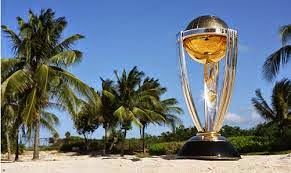
Cricket World Cup History--PakWatanWeb


The first men's cricket World Cup was held in England in 1975, four years after the first recognised one-day international had been played in 1971, on the fifth day of a washed out test between Australia and England in Melbourne.

In the world of men's ODI cricket, ICC World Cup is regarded as the premier tournament, witnessing participation as well as viewership from all across the globe. Its history dates back to the year 1975, when the inaugural tournament was played on England soil, with the participants being the six Test-playing nations at the time i.e. Australia, England, the West Indies, New Zealand, India, and Pakistan, along with Sri Lanka and a composite team from East Africa. The first three events of the competition were held in England and officially known as the Prudential Cup, after the sponsor - Prudential plc.

1975, England


The first World Cup, A. K. A. the Prudential Cup Trophy, had matches of 60 overs per innings, with each over comprising of 6 balls. The tournament comprised of daytime matches, played in the traditional form, and was won by West Indies (who defeated Australia in the finals). The Second World Cup saw the introduction of ICC Trophy, held for the purpose of selecting non-Test playing teams for the World Cup. In the first ICC Trophy, Sri Lanka and Canada emerged as the winners. However, the World Cup went, once again, to the West Indies team, who won the final match after defeating the hosts i.e. England.

Fine weather blessed the first global one-day tournament culminating in an unforgettable final between West Indies and Australia at Lord's. Striking the ball with relaxed brutality, West Indies' captain Clive Lloyd tamed an attack headed by the pace and fury of Dennis Lillee and Jeff Thomson to score 102 from 85 balls.

He was ably assisted by the 39-year-old Rohan Kanhai, a late replacement for his injured contemporary Garfield Sobers. Kanhai contributed 55 to West Indies' 291 for eight from their 60 overs.

Australia captain Ian Chappell led a spirited reply with 62 before he fell victim to one of three runouts effected by the electric reflexes of Viv Richards. Lillee and Thomson added 41 for the final wicket before Australia were finally dismissed for 274 at twilight on the longest day of the year.

1979, England


In a meeting following the Second ODI World Cup, the International Cricket Conference decided to make the competition a quadrennial event i.e. an event that would be held only once in four years.

Peace was brokered with Australian entrepreneur Kerry Packer, whose rebel World Series had split world cricket, shortly before the second World Cup. Australia still chose not to select any of the players who had signed for Packer but West Indies did and a team who were to rule world cricket throughout the next decade demolished England in the final.

Richards, then the world's number one batsman, stroked an imperious 138 and Collis King struck a whirlwind 86. Although England captain Mike Brearley and Geoff Boycott put on 129 for the first wicket, they took up 38 of the 60 overs. After their dismissals, the giant Joel Garner ran through the middle order with a series of unplayable yorkers to take five wickets in 11 balls and give his team victory by 92 runs.

1983, England


So, the next tournament was held in 1983, hosted by England and won by the Indian team (after defeating the previous champions - West Indies - in the final match). It was in this World Cup only that the fielding circle was introduced, 30 yards (27 m) away from the stumps, in which four fieldsmen had to be present at all times.

Richards seemed intent on winning the final against underdogs India on his own after West Indies had been set a modest 184 to win. He struck seven boundaries in his 33 from 28 balls before top-edging a hook which India captain Kapil Dev, running away from the pitch towards the boundary at mid-wicket, coolly collected.

West Indies imploded thereafter, with India recording a famous 43-run victory which was to have profound implications at home where one-day cricket quickly superseded the test game as the most popular form of the sport.

1987, India and Pakistan


The fourth ICC Cricket World Cup was held in 1987, with India and Pakistan playing the hosts. The tournament saw two new occurrences � first, it was the first time that the matches were played outside England and second, the overs were reduced from 60 to 50 per innings. The Australian team won this time, defeating England by 7 runs in the final (this is, till now, the closest margin in World Cup final history).

England appeared to be cruising to victory in the final against Australia at Kolkata's Eden Gardens when Mike Gatting tried a reverse sweep off opposing captain Allan Border's first delivery and lobbed a simple catch.

1992, Australia and New Zealand


Australia and New Zealand hosted the fifth World Cup, in which Pakistan emerged as the winner, after defeating England. This tournament also saw the introduction of colored clothing, white balls and day/night matches, along with a change in the fielding restrictions.

Famously urged by their captain Imran Khan to "fight like cornered tigers," Pakistan rebounded from imminent elimination in the opening round to defeat England in the final at the Melbourne Cricket Ground. Imran, the greatest player to emerge from Pakistan, scored 72 batting at number three in his final match for his country. He also took the final wicket after his protege Wasim Akram had blown away Ian Botham, Allan Lamb and Chris Lewis.

1996, India, Pakistan and Sri Lanka


The Indian subcontinent once again became the host of World Cup in 1996, when the matches were played in India, Sri Lanka and Pakistan. The final match was played in Lahore and saw Sri Lanka emerging as the winner, defeating Australia by seven wickets.

Sri Lanka, with the explosive Sananth Jayasuriya at the top of the order and Muttiah Muralitharan bewitching opposing batsmen with his prodigious powers of spin, proved worthy champions.

The Sri Lankans had demonstrated before the tournament that they could chase down totals previously thought beyond reach and they exploited the fielding restrictions at the start of the innings by attacking from the first ball.

Aravinda da Silva, their most accomplished batsman, scored an assured unbeaten century in the seven-wicket win over Australia in the final in Lahore.

1999, England & Wales, Ireland and Scotland


The next tournament was organized, once again, in England, with some matches also being held in Scotland, Ireland, Wales and the Netherlands. The final match, played between Australia and Pakistan, saw the former claiming its second win. Australia made no contest of the final against Pakistan, taking barely 4-1/2 hours to overwhelm the 1992 champions.

Australia, the world's best test side, were in danger of elimination in the group stages and again in the Super Six round where 120 not out from captain Steve Waugh, dropped on 56 by Herschelle Gibbs, ensured victory over South Africa.

Then, in a semi-final between the same teams, South Africa needed only one run with four balls remaining in the final over with their best one-day batsman Lance Klusner on strike. A panicky runout tied an epic match which put Australia through by virtue by beating South Africa in the previous round.

2003, South Africa, Zimbabwe and Kenya


The eighth World Cup saw the number of participating teams increase to fourteen, from twelve; Kenya's victories over Sri Lanka and Zimbabwe; and forfeiture by New Zealand (because of security reasons). The feat was repeated by Australia in the World Cup, held in 2003, when it beat India by 125 runs.

Australia's new one-day captain Ricky Ponting struck eight sixes in his 140 not out in the final against India as his team scaled new heights with a relentless 125-run victory. The Australians became the first team to win three World Cups and took their unbeaten run in the tournament to 16.

2007, West Indies


The ninth ODI World Cup was hosted by the West Indies. With this, it became the first such tournament to be hosted on all six populated continents. The competition saw a number of firsts. It was the first time Bangladesh progressed to the 2nd round and it was the first time Ireland played in the World Cup (and even went ahead to the main ODI table). The tournament was won by Australia, registering its fourth win (defeating Sri Lanka in the final match).

Adam Gilchrist bettered Ponting's record tally in a final with a typically audacious 149. Two other Australian giants, Matthew Hayden and Glenn McGrath, were the leading run-scorer and wicket-taker respectively.

The tournament was overshadowed by the death of popular Pakistan coach Bob Woolmer at the age of 58 in his hotel room in Jamaica after his team had unexpectedly lost to Ireland. Police launched a murder investigation which led nowhere and a jury later returned an open verdict.

2011, India, Sri Lanka and Bangladesh


The 10th ICC Cricket World Cup was hosted by India, Sri Lanka, and Bangladesh. 2011 WC was won by India who defeated Sri Lanka by 6 wickets. India became the first nation to win a world cup final on home soil.

Mahela Jayawardene scored an unbeaten 103 in Sri Lanka's challenging 274-6 but India recovered from a slow start to win by six wickets with 10 balls to spare with Gautam Gambhir making 97 and India's captain Mahendra Singh Dhoni an unbeaten 91.

Pakistan were also selected as one of four co-hosts but were stripped of their matches because of security fears following the attack on the touring Sri Lankan team in 2009.

2015, Australia and New Zealand


The 2015 Cricket World Cup is the 11th Cricket World Cup, jointly hosted by Australia and New Zealand from 14 February to 29 March 2015. Fourteen teams have played 49 matches in 14 venues. The final match of the tournament took placeed at the Melbourne Cricket Ground between co-hosts New Zealand and Australia with Australia winning by 7 wickets.

New Zealand opener Martin Guptil (547) was the highest run scorer in the 2015 Cricket World Cup, while Australian seamer Mitchell Start Starc (22) and New Zealand' pacer Trent Boult (22) leading wicket takers in the tournament.


S# Year Host(s) Winner Runner Dates
1. 1975 England West Indies Australia 07-Jun to 21-Jun
2. 1979 England West Indies England 09-Jun to 23-Jun
3. 1983 England India West Indies 09-Jun to 25-Jun
4. 1987 India, Pakistan Australia England 08-Oct to 08-Nov
5. 1992 Australia, New Zealand Pakistan England 22-Feb to 25-Mar
6. 1996 India, Pakistan, Sri Lanka Sri Lanka Australia 14-Feb to 17-Mar
7. 1999 England, Scotland, Ireland Australia Pakistan 14-May to 20-Jun
8. 2003 South Africa, Zimbabwe, Kenya Australia India 09-Feb to 23-Mar
9. 2007 West Indies Australia Sri Lanka 13-Mar to 28-Apr
10. 2011 India, Sri Lanka, Bangladesh India Sri Lanka 10-Feb to 02-Apr-
11. 2015 Australia, New Zealand Australia New Zealand 14-Feb to 29-Mar
12. 2019 England TBD TBD 30-May to 15-Jul
13. 2023 India TBD TBD TBD

A brief history of cricket - PakWatanWeb

The origins of cricket lie somewhere in the Dark Ages - probably after the Roman Empire, almost certainly before the Normans invaded England, and almost certainly somewhere in Northern Europe. All research concedes that the game derived from a very old, widespread and uncomplicated pastime by which one player served up an object, be it a small piece of wood or a ball, and another hit it with a suitably fashioned club.
How and when this club-ball game developed into one where the hitter defended a target against the thrower is simply not known. Nor is there any evidence as to when points were awarded dependent upon how far the hitter was able to despatch the missile; nor when helpers joined the two-player contest, thus beginning the evolution into a team game; nor when the defining concept of placing wickets at either end of the pitch was adopted.
Etymological scholarship has variously placed the game in the Celtic, Scandinavian, Anglo-Saxon, Dutch and Norman-French traditions; sociological historians have variously attributed its mediaeval development to high-born country landowners, emigré Flemish cloth-workers, shepherds on the close-cropped downland of south-east England and the close-knit communities of iron- and glass-workers deep in the Kentish Weald. Most of these theories have a solid academic basis, but none is backed with enough evidence to establish a watertight case. The research goes on.
What is agreed is that by Tudor times cricket had evolved far enough from club-ball to be recognisable as the game played today; that it was well established in many parts of Kent, Sussex and Surrey; that within a few years it had become a feature of leisure time at a significant number of schools; and - a sure sign of the wide acceptance of any game - that it had become popular enough among young men to earn the disapproval of local magistrates.
Dates in cricket history

1550 (approx) Evidence of cricket being played in Guildford, Surrey.
1598 Cricket mentioned in Florio's Italian-English dictionary.
1610 Reference to "cricketing" between Weald and Upland near Chevening, Kent. 1611 Randle Cotgrave's French-English dictionary translates the French word "crosse" as a cricket staff.
Two youths fined for playing cricket at Sidlesham, Sussex.

1624 Jasper Vinall becomes first man known to be killed playing cricket: hit by a bat while trying to catch the ball - at Horsted Green, Sussex.
1676 First reference to cricket being played abroad, by British residents in Aleppo, Syria.
1694 Two shillings and sixpence paid for a "wagger" (wager) about a cricket match at Lewes.
1697 First reference to "a great match" with 11 players a side for fifty guineas, in Sussex.
1700 Cricket match announced on Clapham Common.

1709 First recorded inter-county match: Kent v Surrey.
1710 First reference to cricket at Cambridge University.
1727 Articles of Agreement written governing the conduct of matches between the teams of the Duke of Richmond and Mr Brodrick of Peperharow, Surrey.
1729 Date of earliest surviving bat, belonging to John Chitty, now in the pavilion at The Oval.
1730 First recorded match at the Artillery Ground, off City Road, central London, still the cricketing home of the Honourable Artillery Company.

1744 Kent beat All England by one wicket at the Artillery Ground.
First known version of the Laws of Cricket, issued by the London Club, formalising the pitch as 22 yards long.
1767 (approx) Foundation of the Hambledon Club in Hampshire, the leading club in England for the next 30 years.
1769 First recorded century, by John Minshull for Duke of Dorset's XI v Wrotham.
1771 Width of bat limited to 4 1/4 inches, where it has remained ever since.
1774 LBW law devised.
1776 Earliest known scorecards, at the Vine Club, Sevenoaks, Kent.
1780 The first six-seamed cricket ball, manufactured by Dukes of Penshurst, Kent.
1787 First match at Thomas Lord's first ground, Dorset Square, Marylebone - White Conduit Club v Middlesex.
Formation of Marylebone Cricket Club by members of the White Conduit Club.
1788 First revision of the Laws of Cricket by MCC.
1794 First recorded inter-schools match: Charterhouse v Westminster.
1795 First recorded case of a dismissal "leg before wicket".
1806 First Gentlemen v Players match at Lord's.
1807 First mention of "straight-armed" (i.e. round-arm) bowling: by John Willes of Kent.
1809 Thomas Lord's second ground opened at North Bank, St John's Wood.
1811 First recorded women's county match: Surrey v Hampshire at Ball's Pond, London.
1814 Lord's third ground opened on its present site, also in St John's Wood.
1827 First Oxford v Cambridge match, at Lord's. A draw.
1828 MCC authorise the bowler to raise his hand level with the elbow.
1833 John Nyren publishes his classic Young Cricketer's Tutor and The Cricketers of My Time.
1836 First North v South match, for many years regarded as the principal fixture of the season.
1836 (approx) Batting pads invented.
1841 General Lord Hill, commander-in-chief of the British Army, orders that a cricket ground be made an adjunct of every military barracks.
1844 First official international match: Canada v United States.
1845 First match played at The Oval.
1846 The All-England XI, organised by William Clarke, begins playing matches, often against odds, throughout the country.
1849 First Yorkshire v Lancashire match.
1850 Wicket-keeping gloves first used.
1850 John Wisden bowls all ten batsmen in an innings for North v South.
1853 First mention of a champion county: Nottinghamshire.
1858 First recorded instance of a hat being awarded to a bowler taking three wickets with consecutive balls.
1859 First touring team to leave England, captained by George Parr, draws enthusiastic crowds in the US and Canada.
1864 Overhand bowling authorised by MCC.
John Wisden's The Cricketer's Almanack first published.
1868 Team of Australian aborigines tour England.
1873 WG Grace becomes the first player to record 1,000 runs and 100 wickets in a season.
First regulations restricting county qualifications, often regarded as the official start of the County Championship.
1877 First Test match: Australia beat England by 45 runs in Melbourne.
1880 First Test in England: a five-wicket win against Australia at The Oval.
1882 Following England's first defeat by Australia in England, an "obituary notice" to English cricket in the Sporting Times leads to the tradition of The Ashes.
1889 South Africa's first Test match.
Declarations first authorised, but only on the third day, or in a one-day match.
1890 County Championship officially constituted.
Present Lord's pavilion opened.
1895 WG Grace scores 1,000 runs in May, and reaches his 100th hundred.
1899 AEJ Collins scores 628 not out in a junior house match at Clifton College, the highest individual score in any match.
Selectors choose England team for home Tests, instead of host club issuing invitations.
1900 Six-ball over becomes the norm, instead of five.
1909 Imperial Cricket Conference (ICC - now the International Cricket Council) set up, with England, Australia and South Africa the original members.
1910 Six runs given for any hit over the boundary, instead of only for a hit out of the ground.
1912 First and only triangular Test series played in England, involving England, Australia and South Africa.
1915 WG Grace dies, aged 67.
1926 Victoria score 1,107 v New South Wales at Melbourne, the record total for a first-class innings.
1928 West Indies' first Test match.
AP "Tich" Freeman of Kent and England becomes the only player to take more than 300 first-class wickets in a season: 304.
1930 New Zealand's first Test match.
Donald Bradman's first tour of England: he scores 974 runs in the five Ashes Tests, still a record for any Test series.
1931 Stumps made higher (28 inches not 27) and wider (nine inches not eight - this was optional until 1947).
1932 India's first Test match.
Hedley Verity of Yorkshire takes ten wickets for ten runs v Nottinghamshire, the best innings analysis in first-class cricket.
1932-33 The Bodyline tour of Australia in which England bowl at batsmen's bodies with a packed leg-side field to neutralise Bradman's scoring.
1934 Jack Hobbs retires, with 197 centuries and 61,237 runs, both records. First women's Test: Australia v England at Brisbane.
1935 MCC condemn and outlaw Bodyline.
1947 Denis Compton of Middlesex and England scores a record 3,816 runs in an English season.
1948 First five-day Tests in England.
Bradman concludes Test career with a second-ball duck at The Oval and a batting average of 99.94 - four runs short of 100.
1952 Pakistan's first Test match.
1953 England regain the Ashes after a 19-year gap, the longest ever.
1956 Jim Laker of England takes 19 wickets for 90 v Australia at Manchester, the best match analysis in first-class cricket.
1957 Declarations authorised at any time.
1960 First tied Test, Australia v West Indies at Brisbane.
1963 Distinction between amateur and professional cricketers abolished in English cricket.
The first major one-day tournament begins in England: the Gillette Cup.
1969 Limited-over Sunday league inaugurated for first-class counties.
1970 Proposed South African tour of England cancelled: South Africa excluded from international cricket because of their government's apartheid policies.
1971 First one-day international: Australia v England at Melbourne.
1975 First World Cup: West Indies beat Australia in final at Lord's.
1976 First women's match at Lord's, England v Australia.
1977 Centenary Test at Melbourne, with identical result to the first match: Australia beat England by 45 runs.
Australian media tycoon Kerry Packer, signs 51 of the world's leading players in defiance of the cricketing authorities.
1978 Graham Yallop of Australia wears a protective helmet to bat in a Test match, the first player to do so.
1979 Packer and official cricket agree peace deal.
1980 Eight-ball over abolished in Australia, making the six-ball over universal.
1981 England beat Australia in Leeds Test, after following on with bookmakers offering odds of 500 to 1 against them winning.
1982 Sri Lanka's first Test match.
1991 South Africa return, with a one-day international in India.
1992 Zimbabwe's first Test match.
Durham become the first county since Glamorgan in 1921 to attain firstclass status.
1993 The ICC ceases to be administered by MCC, becoming an independent organisation with its own chief executive.
1994 Brian Lara of Warwickshire becomes the only player to pass 500 in a firstclass innings: 501 not out v Durham.
2000 South Africa's captain Hansie Cronje banned from cricket for life after admitting receiving bribes from bookmakers in match-fixing scandal.
Bangladesh's first Test match.
County Championship split into two divisions, with promotion and relegation.
The Laws of Cricket revised and rewritten.
2001 Sir Donald Bradman dies, aged 92.
2003 Twenty20 Cup, a 20-over-per-side evening tournament, inaugurated in England.
2004 Lara becomes the first man to score 400 in a Test innings, against England.
2005 The ICC introduces Powerplays and Supersubs in ODIs, and hosts the inaugural Superseries.
2006 Pakistan forfeit a Test at The Oval after being accused of ball tampering.

Information source:

http://www.espncricinfo.com
Related Posts Plugin for WordPress, Blogger...