Showing posts with label Cricket. Show all posts

International Cricket Council Body--PakWatanWeb

ICC is world cricket's governing body. It is responsible for managing the playing conditions and Code of Conduct for international fixtures, expanding the game and organising the major international tournaments, including the World Cup. Its mission statement says the ICC "will lead by promoting the game as a global sport, protecting the spirit of cricket and optimising commercial opportunities for the benefit of the game."
Ten national governing bodies are currently Full Members of the ICC; full membership qualifies a nation (or geographic area) to play official Test matches. A candidate for full membership must meet a number of playing and administrative criteria, after which elevation is decided by a vote among existing Full Members. There are also currently 33 Associate Members (non-Test-playing nations or geographic areas where cricket is firmly established and organised) and 55 Affiliate Members (other countries or geographic areas where the ICC recognises that cricket is played in accordance with the Laws).
The ICC was founded in 1909 as the Imperial Cricket Conference by three foundation members: England, Australia and South Africa. Other countries (or geographic areas) became Full Members and thus acquired Test-match status as follows: India, New Zealand and West Indies in 1926, Pakistan in 1952, Sri Lanka in 1981, Zimbabwe in 1992 and Bangladesh in 2000. South Africa ceased to be a member on leaving the Commonwealth in 1961, but was re-elected as a Full Member in 1991.
In 1965, the Conference was renamed the International Cricket Conference and new rules permitted the election of countries from outside the Commonwealth for the first time. The first Associate members (Fiji and USA), who had diluted voting rights, were admitted. However, foundation members retained a veto over all resolutions.
In 1989, the Conference was again renamed without changing its initials. The new International Cricket Council adopted revised rules, aimed at producing an organisation which could make a larger number of binding decisions, rather than simply make recommendations to national governing bodies. In 1993, the Council, which had previously been administered by MCC, gained its own secretariat and chief executive, though its headquarters remained at Lord's. The category of Foundation Member was abolished. Sir Clyde Walcott became the first non-British chairman.
In 1997, the Council became an incorporated body, with an executive board, and a president instead of a chairman. One Australian, Malcolm Speed, succeeded another, David Richards, as chief executive in July 2001. The ICC remained at Lord's, with a commercial base in Monaco, although in 2005 it moved to Dubai, where it is believed there would be organisational and tax advantages.
Constitution

President:

Each Full Member has the right, by rotation, to appoint ICC's president. In 2006 the process was briefly changed and a committee appointed to select the next president, but they failed at the first attempt, unable to split Sharad Pawar from India and David Morgan from England, and the selection reverted to rotation between six regions - India/Sri Lanka, Pakistan/Bangladesh, West Indies/England, Australia/New Zealand, South Africa/Zimbabwe and then a choice from the Associates and Affiliates.

  • 1997-2000 Jagmohan Dalmiya (India)
  • 2000-2003 Malcolm Gray (Australia)
  • 2003-2006 Ehsan Mani (Pakistan)
  • 2006-2007 Percy Sonn (South Africa)
  • 2007-2008 Ray Mali (South Africa)
  • 2008-2010 David Morgan (England)
  • 2010-2012 Sharad Pawar (India)
  • 2012-2014 Alan Isaac (New Zealand)


Chief Executive:

Appointed by the ICC council.
1993-2001 Dave Richards (Australia)
2001-2008 Malcolm Speed (Australia)
2008-2012 Haroon Lorgat (South Africa)
2012- David Richardson (South Africa)
Membership

Full Members

  • Australia, 
  • Bangladesh, 
  • England, 
  • India, 
  • New Zealand, 
  • Pakistan, 
  • South Africa, 
  • Sri Lanka, 
  • West Indies 
  • Zimbabwe.


Associate Members


  • Argentina (1974), 
  • Bermuda (1966), 
  • Belgium (1991), 
  • Botswana (2001), 
  • Canada (1968), 
  • Cayman Islands (2002), 
  • Denmark (1966), 
  • Fiji (1965), 
  • France (1998), 
  • Germany (1999), 
  • Gibraltar (1969), 
  • Hong Kong (1969), 
  • Ireland (1993),
  • Israel (1974), 
  • Italy (1995), 
  • Japan (1989), 
  • Jersey (2007), 
  • Kenya (1981), 
  • Kuwait (1998), 
  • Malaysia (1967), 
  •  Namibia (1992), 
  • Nepal (1996), 
  • Netherlands (1966), 
  • Nigeria (2002), 
  • Papua New Guinea (1973), 
  • Scotland (1994), 
  • Singapore (1974), 
  • Tanzania (2001), 
  • Thailand (1995), 
  • Uganda (1998), 
  • United Arab Emirates (1990), 
  • USA (1965), 
  • Zambia (2003).


Affiliate Members


  • Afghanistan (2001), 
  • Austria (1992), 
  • Bahamas (1987),
  • Bahrain (2001), 
  •  Belize (1997), 
  • Bhutan (2001), 
  • Brazil (2002), 
  •  Brunei (1992), 
  • Cameroon (2007),
  • Chile (2002), 
  • China (2004), 
  • Cook Islands (2000), 
  • Costa Rica (2002), 
  • Croatia (2001), 
  • Cuba (2002), 
  • Cyprus (1999), 
  •  Czech Republic (2000), 
  • Falkland Islands (2007), 
  • Finland (2000), 
  • Hungary (2012), 
  • Gambia (2002), 
  • Ghana (2002), 
  • Greece (1995), 
  • Guernsey (2005), 
  •  Indonesia (2001), 
  • Iran (2003), 
  • Isle of Man (2004), 
  • Jersey (2005), 
  •  Lesotho (2001), 
  • Luxembourg (1998), 
  • Malawi (2003), 
  • Maldives (2001), 
  • Mali (2005), 
  • Malta (1998), 
  • Mexico (2004), 
  • Morocco (1999), 
  • Mozambique (2003), 
  •  Norway (2000), 
  • Oman (2000), 
  • Panama (2002), 
  • Peru (2007), 
  • Philippines (2000), 
  • Portugal (1996), 
  • Qatar (1999), 
  • Russia (2012), 
  • Rwanda (2003),
  • St Helena (2001), 
  • Samoa (2000), 
  • Saudi Arabia (2003), 
  • Sierra Leone (2002), 
  • South Korea (2001), 
  • Slovenia (2005), 
  • Spain (1992), 
  • Suriname (2002), 
  • Swaziland (2007), 
  • Sweden (1997), 
  • Tonga (2000), 
  • Turks & Caicos Islands (2002) 
  • Vanuatu (1995).

The following governing bodies for cricket shall be eligible for election.

Full Members:

The governing body for cricket (recognised by the ICC) of a country, or countries associated for cricket purposes, or a geographical area, from which representative teams are qualified to play official Test matches.

Associate Members:

The governing body for cricket (recognised by the ICC) of a country, or countries associated for cricket purposes, or a geographical area, which does not qualify as a Full Member but where cricket is firmly established and organised.

Affiliate Members:

The governing body for cricket (recognised by the ICC) of a country, or countries associated for cricket purposes, or a geographical area (which is not part of one of those already constituted as a Full or Associate Member) where the ICC recognises that cricket is played in accordance with the Laws of Cricket. Affiliate Members have no right to vote or to propose or second resolutions at ICC meetings.

ICC Associates and Affiliates - PakWatanWeb

Associate Members

The governing body for cricket (recognised by the ICC) of a country, or countries associated for cricket purposes, or a geographical area, which does not qualify as a Full Member but where cricket is firmly established and organised.

Affiliate Members

The governing body for cricket (recognised by the ICC) of a country, or countries associated for cricket purposes, or a geographical area (which is not part of one of those already constituted as a Full or Associate Member) where the ICC recognises that cricket is played in accordance with the Laws of Cricket. Affiliate Members have no right to vote or to propose or second resolutions at ICC meetings.

ICC Associates

ICC Affiliates

Twenty20 World Cup History---PakWatanWeb


The period lasting from the year 1998 to 2001 was can be traced back as the time of origin of Twenty20 cricket. However, it was in the year 2001 that the idea of a shortened form of cricket, earlier discussed by England and Wales Cricket Board (ECB), began to take a concrete shape. The concept of 40-over game, with 20 overs per innings, was presented to the county chairman in the same year and later, passed with a voting of 11-7, 11 in favor and 7 against. Soon, the new form of cricket was given the name of Twenty20, more popularly T20.

T20 Cricket was formally introduced to the world in 2003, when ECB launched the Twenty20 Cup, along with slogan “I don’t like cricket, I love it”. The same year, the first Twenty20 cricket tournament was organized in England, with various county cricket teams. The tournament proved to be a success, with thousands of spectators filling the England’s cricket stadiums, a first in many decades. Soon, other cricket playing nations of the world also started to take notice of Twenty20 cricket.

Soon after the first Twenty20 cricket tournament was played and became overnight success, South Africa, Australia and the West Indies also organized similar tournaments, which again attracted huge cricket audience. In the year 2005, history was created, when Twenty20 cricket made its international debut, with the first T20 International being played, between Australia and New Zealand at Eden Park. As the popularity of the new form of cricket started rising, surpassing that of even ODIs and Tests, the game was taken more seriously.

By 2007, the popularity of Twenty20 had gained such heights that ICC organized the first international Twenty20 tournament, rather the inaugural Twenty20 World Cup, creating another history of sorts. With South Africa as the host, the tournament included 10 Test playing nations, apart from ICC associate nations - Kenya and Scotland. India won the first ICC T20 World Cup, beating Pakistan in the finals.
ICC World Twenty20 Details (Since 2007)
Year Host Winner Runner-Up
2007 South Africa India Pakistan
2009 England Pakistan Sri Lanka
2010 West Indies England Australia
2012 Sri Lanka West Indies Sri Lanka
2014 Bangladesh Sri Lanka India
2016 India TBD TBD

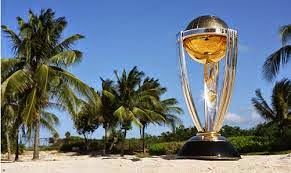
Cricket World Cup History--PakWatanWeb


The first men's cricket World Cup was held in England in 1975, four years after the first recognised one-day international had been played in 1971, on the fifth day of a washed out test between Australia and England in Melbourne.

In the world of men's ODI cricket, ICC World Cup is regarded as the premier tournament, witnessing participation as well as viewership from all across the globe. Its history dates back to the year 1975, when the inaugural tournament was played on England soil, with the participants being the six Test-playing nations at the time i.e. Australia, England, the West Indies, New Zealand, India, and Pakistan, along with Sri Lanka and a composite team from East Africa. The first three events of the competition were held in England and officially known as the Prudential Cup, after the sponsor - Prudential plc.

1975, England


The first World Cup, A. K. A. the Prudential Cup Trophy, had matches of 60 overs per innings, with each over comprising of 6 balls. The tournament comprised of daytime matches, played in the traditional form, and was won by West Indies (who defeated Australia in the finals). The Second World Cup saw the introduction of ICC Trophy, held for the purpose of selecting non-Test playing teams for the World Cup. In the first ICC Trophy, Sri Lanka and Canada emerged as the winners. However, the World Cup went, once again, to the West Indies team, who won the final match after defeating the hosts i.e. England.

Fine weather blessed the first global one-day tournament culminating in an unforgettable final between West Indies and Australia at Lord's. Striking the ball with relaxed brutality, West Indies' captain Clive Lloyd tamed an attack headed by the pace and fury of Dennis Lillee and Jeff Thomson to score 102 from 85 balls.

He was ably assisted by the 39-year-old Rohan Kanhai, a late replacement for his injured contemporary Garfield Sobers. Kanhai contributed 55 to West Indies' 291 for eight from their 60 overs.

Australia captain Ian Chappell led a spirited reply with 62 before he fell victim to one of three runouts effected by the electric reflexes of Viv Richards. Lillee and Thomson added 41 for the final wicket before Australia were finally dismissed for 274 at twilight on the longest day of the year.

1979, England


In a meeting following the Second ODI World Cup, the International Cricket Conference decided to make the competition a quadrennial event i.e. an event that would be held only once in four years.

Peace was brokered with Australian entrepreneur Kerry Packer, whose rebel World Series had split world cricket, shortly before the second World Cup. Australia still chose not to select any of the players who had signed for Packer but West Indies did and a team who were to rule world cricket throughout the next decade demolished England in the final.

Richards, then the world's number one batsman, stroked an imperious 138 and Collis King struck a whirlwind 86. Although England captain Mike Brearley and Geoff Boycott put on 129 for the first wicket, they took up 38 of the 60 overs. After their dismissals, the giant Joel Garner ran through the middle order with a series of unplayable yorkers to take five wickets in 11 balls and give his team victory by 92 runs.

1983, England


So, the next tournament was held in 1983, hosted by England and won by the Indian team (after defeating the previous champions - West Indies - in the final match). It was in this World Cup only that the fielding circle was introduced, 30 yards (27 m) away from the stumps, in which four fieldsmen had to be present at all times.

Richards seemed intent on winning the final against underdogs India on his own after West Indies had been set a modest 184 to win. He struck seven boundaries in his 33 from 28 balls before top-edging a hook which India captain Kapil Dev, running away from the pitch towards the boundary at mid-wicket, coolly collected.

West Indies imploded thereafter, with India recording a famous 43-run victory which was to have profound implications at home where one-day cricket quickly superseded the test game as the most popular form of the sport.

1987, India and Pakistan


The fourth ICC Cricket World Cup was held in 1987, with India and Pakistan playing the hosts. The tournament saw two new occurrences � first, it was the first time that the matches were played outside England and second, the overs were reduced from 60 to 50 per innings. The Australian team won this time, defeating England by 7 runs in the final (this is, till now, the closest margin in World Cup final history).

England appeared to be cruising to victory in the final against Australia at Kolkata's Eden Gardens when Mike Gatting tried a reverse sweep off opposing captain Allan Border's first delivery and lobbed a simple catch.

1992, Australia and New Zealand


Australia and New Zealand hosted the fifth World Cup, in which Pakistan emerged as the winner, after defeating England. This tournament also saw the introduction of colored clothing, white balls and day/night matches, along with a change in the fielding restrictions.

Famously urged by their captain Imran Khan to "fight like cornered tigers," Pakistan rebounded from imminent elimination in the opening round to defeat England in the final at the Melbourne Cricket Ground. Imran, the greatest player to emerge from Pakistan, scored 72 batting at number three in his final match for his country. He also took the final wicket after his protege Wasim Akram had blown away Ian Botham, Allan Lamb and Chris Lewis.

1996, India, Pakistan and Sri Lanka


The Indian subcontinent once again became the host of World Cup in 1996, when the matches were played in India, Sri Lanka and Pakistan. The final match was played in Lahore and saw Sri Lanka emerging as the winner, defeating Australia by seven wickets.

Sri Lanka, with the explosive Sananth Jayasuriya at the top of the order and Muttiah Muralitharan bewitching opposing batsmen with his prodigious powers of spin, proved worthy champions.

The Sri Lankans had demonstrated before the tournament that they could chase down totals previously thought beyond reach and they exploited the fielding restrictions at the start of the innings by attacking from the first ball.

Aravinda da Silva, their most accomplished batsman, scored an assured unbeaten century in the seven-wicket win over Australia in the final in Lahore.

1999, England & Wales, Ireland and Scotland


The next tournament was organized, once again, in England, with some matches also being held in Scotland, Ireland, Wales and the Netherlands. The final match, played between Australia and Pakistan, saw the former claiming its second win. Australia made no contest of the final against Pakistan, taking barely 4-1/2 hours to overwhelm the 1992 champions.

Australia, the world's best test side, were in danger of elimination in the group stages and again in the Super Six round where 120 not out from captain Steve Waugh, dropped on 56 by Herschelle Gibbs, ensured victory over South Africa.

Then, in a semi-final between the same teams, South Africa needed only one run with four balls remaining in the final over with their best one-day batsman Lance Klusner on strike. A panicky runout tied an epic match which put Australia through by virtue by beating South Africa in the previous round.

2003, South Africa, Zimbabwe and Kenya


The eighth World Cup saw the number of participating teams increase to fourteen, from twelve; Kenya's victories over Sri Lanka and Zimbabwe; and forfeiture by New Zealand (because of security reasons). The feat was repeated by Australia in the World Cup, held in 2003, when it beat India by 125 runs.

Australia's new one-day captain Ricky Ponting struck eight sixes in his 140 not out in the final against India as his team scaled new heights with a relentless 125-run victory. The Australians became the first team to win three World Cups and took their unbeaten run in the tournament to 16.

2007, West Indies


The ninth ODI World Cup was hosted by the West Indies. With this, it became the first such tournament to be hosted on all six populated continents. The competition saw a number of firsts. It was the first time Bangladesh progressed to the 2nd round and it was the first time Ireland played in the World Cup (and even went ahead to the main ODI table). The tournament was won by Australia, registering its fourth win (defeating Sri Lanka in the final match).

Adam Gilchrist bettered Ponting's record tally in a final with a typically audacious 149. Two other Australian giants, Matthew Hayden and Glenn McGrath, were the leading run-scorer and wicket-taker respectively.

The tournament was overshadowed by the death of popular Pakistan coach Bob Woolmer at the age of 58 in his hotel room in Jamaica after his team had unexpectedly lost to Ireland. Police launched a murder investigation which led nowhere and a jury later returned an open verdict.

2011, India, Sri Lanka and Bangladesh


The 10th ICC Cricket World Cup was hosted by India, Sri Lanka, and Bangladesh. 2011 WC was won by India who defeated Sri Lanka by 6 wickets. India became the first nation to win a world cup final on home soil.

Mahela Jayawardene scored an unbeaten 103 in Sri Lanka's challenging 274-6 but India recovered from a slow start to win by six wickets with 10 balls to spare with Gautam Gambhir making 97 and India's captain Mahendra Singh Dhoni an unbeaten 91.

Pakistan were also selected as one of four co-hosts but were stripped of their matches because of security fears following the attack on the touring Sri Lankan team in 2009.

2015, Australia and New Zealand


The 2015 Cricket World Cup is the 11th Cricket World Cup, jointly hosted by Australia and New Zealand from 14 February to 29 March 2015. Fourteen teams have played 49 matches in 14 venues. The final match of the tournament took placeed at the Melbourne Cricket Ground between co-hosts New Zealand and Australia with Australia winning by 7 wickets.

New Zealand opener Martin Guptil (547) was the highest run scorer in the 2015 Cricket World Cup, while Australian seamer Mitchell Start Starc (22) and New Zealand' pacer Trent Boult (22) leading wicket takers in the tournament.


S# Year Host(s) Winner Runner Dates
1. 1975 England West Indies Australia 07-Jun to 21-Jun
2. 1979 England West Indies England 09-Jun to 23-Jun
3. 1983 England India West Indies 09-Jun to 25-Jun
4. 1987 India, Pakistan Australia England 08-Oct to 08-Nov
5. 1992 Australia, New Zealand Pakistan England 22-Feb to 25-Mar
6. 1996 India, Pakistan, Sri Lanka Sri Lanka Australia 14-Feb to 17-Mar
7. 1999 England, Scotland, Ireland Australia Pakistan 14-May to 20-Jun
8. 2003 South Africa, Zimbabwe, Kenya Australia India 09-Feb to 23-Mar
9. 2007 West Indies Australia Sri Lanka 13-Mar to 28-Apr
10. 2011 India, Sri Lanka, Bangladesh India Sri Lanka 10-Feb to 02-Apr-
11. 2015 Australia, New Zealand Australia New Zealand 14-Feb to 29-Mar
12. 2019 England TBD TBD 30-May to 15-Jul
13. 2023 India TBD TBD TBD

International Cricket Game Formats - PakWatanWeb

International cricket has a variety of the game for everyone, from the five-day tactical tension of the Test match to the bat-swinging fireworks of Twenty20. The following are a few simple clues to help you tell which of the most popular formats is which.
Test match:
  • Players wear white clothes.
  • Players use a red ball.
  • The match is played in daylight.
  • A match lasts up to five days.
  • The playing day lasts at least seven hours.
One day match:
  • Players wear coloured clothes.
  • Players use a white ball.
  • The match is often played partly under floodlights.
  • Most matches start early afternoon.
  • The playing day lasts about eight hours.
Twenty20 match:
  • Players wear coloured clothes.
  • Players use a white ball.
  • The match is often played partly under floodlights.
  • Most matches are played in the evening.
  • Play lasts just three hours.


If this post helps you then entertain us with your feedback with us in comments below and don't forget to suggest this site PakWatanWeb to your friends.

Source:http://www.dummies.com/how-to/content/cricket-for-dummies-cheat-sheet.html

The LBW Law - PakWatanWeb


For a batsman in a cricket match to be given out leg before wicket (LBW) a strict set of rules apply, to do with where the ball has struck the pitch and then hit the batsman’s pad. This figure takes you through all the possibilities.

image0.jpg

If this post helps you then entertain us with your feedback with us in comments below and don't forget to suggest this site PakWatanWeb to your friends.

Source:http://www.dummies.com/how-to/content/cricket-for-dummies-cheat-sheet.html

Umpiring Signals and their meanings in Cricket - PakWatanWeb

The officials in charge of a game of cricket are called umpires, and they have a whole array of signals to indicate the decisions they make during the course of a game. These are the most important.
  • Right arm outstretched. No-ball. This signal indicates that the bowler’s foot has landed over the front line of the bowling crease and the delivery is deemed a no-ball.
  • Both arms outstretched. Wide. This signal shows that the ball was out of reach of the batsman or woman and has been adjudged a wide. One run goes onto the batting team’s extras score, and the ball must be re-bowled.
  • Right leg raised and clasped by the right hand. Leg byes. This sign indicates that the ball hit the pads of the batsman or woman, not the bat, and that the runs completed are adjudged to be leg byes. These runs are not credited to the individual player’s score but to the team’s, as extras.
  • Right arm raised skywards. Byes. This shows that the ball has been missed by both the batsman or woman and the wicket-keeper. Any runs scored are deemed to be byes. Byes, like leg byes, are counted as extras.
  • Right hand and arm swept across the body. Four runs. This signal signifies that the ball has been hit all the way to the boundary. The ball has bounced on its way to the boundary and four runs have been scored.
  • Both arms held above the head and index fingers outstretched. Six runs. The ball has been hit over the boundary, without the ball bouncing. Six runs are awarded for this fab feat.
  • Index finger raised towards the batsman or woman. Out. The umpire has given the batsman or woman out and they have to leave the crease and take the long, lonely walk back to the pavilion.
  • Right arm held at out horizontally then flexed back to touch the shoulder. Short run. One of the batsmen or women has failed to touch their bat down beyond the front line of the bowling crease when going for a run. This is deemed a short run and the scorer is being told to take that run off the score.
If this post helps you then entertain us with your feedback with us in comments below and don't forget to suggest this site PakWatanWeb to your friends.

Source:http://www.dummies.com/how-to/content/cricket-for-dummies-cheat-sheet.html

Fielding Positions in the Game of Cricket - PakWatanWeb

Now a days peoples are searching too much for the correct fielding positions in Cricket game. But PakWatanWeb is now providing them a solution of their too much search in the form of this post. In the picture below you can see clearly a which line. This line indicated the position of Pitch where batsman play the game and remaining all ground within the boundaries is the fielding area where opposite team players perform fielding to try to stop other team scores.


If this post helps you then entertain us with your feedback with us in comments below and don't forget to suggest your favourite website PakWatanWeb to your friends.

List of Pakistan`s Test Captains - PakWatanWeb

PlayerSpan
AH Kardar1952-1958
Fazal Mahmood1959-1961
Imtiaz Ahmed1959-1962
Javed Burki1962-1962
Hanif Mohammad1964-1967
Saeed Ahmed1969-1969
Intikhab Alam1969-1975
Majid Khan1973-1973
Mushtaq Mohammad1976-1979
Wasim Bari1977-1978
Asif Iqbal1979-1980
Javed Miandad1980-1993
Imran Khan1982-1992
Zaheer Abbas1983-1984
Wasim Akram1993-1999
Waqar Younis1993-2003
Saleem Malik1994-1995
Rameez Raja1995-1997
Saeed Anwar1996-2000
Aamer Sohail1998-1998
Rashid Latif1998-2003
Moin Khan1998-2001
Inzamam-ul-Haq2001-2007
Mohammad Yousuf2003-2010
Younis Khan2005-2009
Shoaib Malik2007-2007
Shahid Afridi2010-2010
Salman Butt2010-2010
Misbah-ul-Haq2010-2015
Mohammad Hafeez2012-2012     courtesy:www.espncricinfo.com
Related Posts Plugin for WordPress, Blogger...